
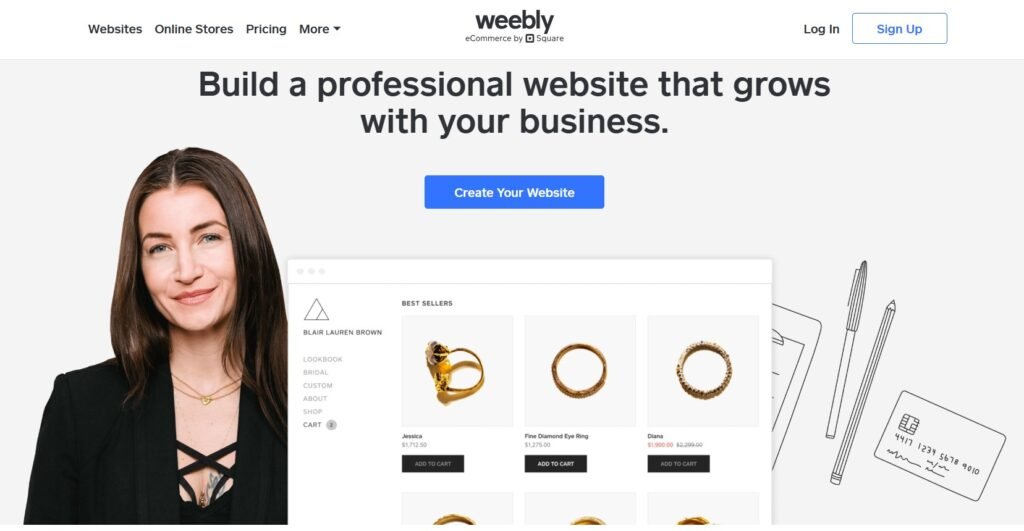
Weebly used to be one of the most popular website builders. Its intuitive drag-and-drop editor, simple templates and focus on accessibility made it a go-to platform for small business owners, hobby bloggers and startup creatives. At the height of its popularity, it was listed as one of the best DIY solutions for users who wanted to build a site without learning code or hiring a developer.
Today, the picture has changed significantly. After being acquired by Square in 2018, Weebly gradually faded into the background. The platform still exists and hosts thousands of live websites, but development has effectively stopped. The mobile app has been discontinued, the app store has accepted no new submissions since 2020, and Square’s own documentation now directs new users to Square Online instead, no longer endorsing Weebly even for first-time users. The lack of innovation, visible updates, and any public roadmap has led many users to question its future and whether they should look elsewhere.
This review breaks down everything you need to know:
- What Weebly does well
- What’s gone wrong in recent years
- Who might still benefit from using it
- Why now is the time to consider migrating your website
Let’s get into the details.
What Weebly Was Known For
When it launched in 2007, Weebly was one of the first website builders to make drag-and-drop editing accessible to everyone. Before Wix exploded in popularity and became its best alternative, or Squarespace redefined visual design for creatives, Weebly made it possible for non-technical users to create and publish a website in hours. It offered an intuitive visual builder, affordable plans including a free tier, basic blogging and eCommerce tools, hosting and domain management in one place, and ready-made responsive templates.
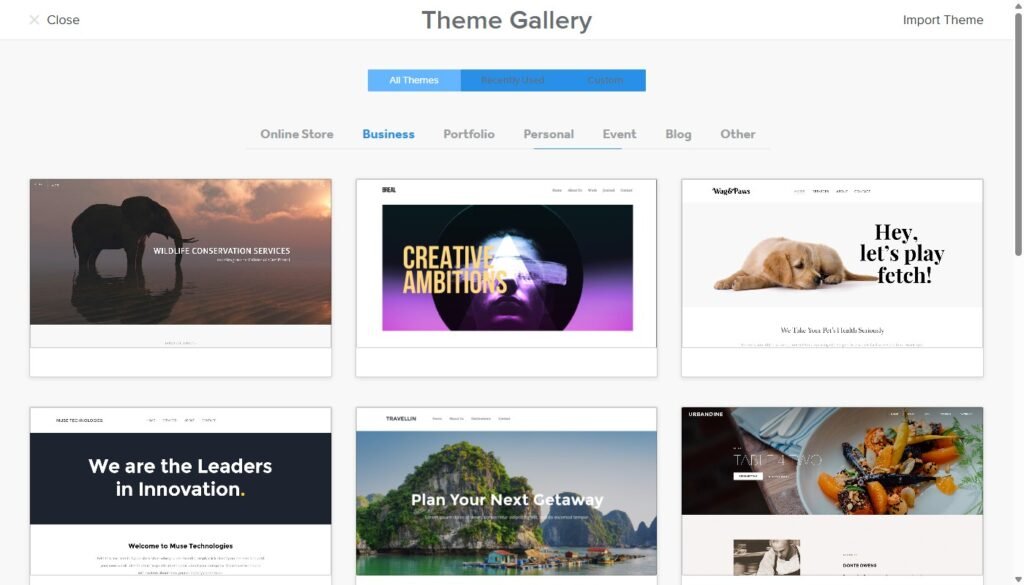
The promise was simple: “A website for anyone.” And for a while, Weebly delivered exactly that. It occupied a genuine and useful place in the market — the easiest on-ramp to the web for people who had never built a site before.
But the market didn’t stand still. While Wix, Squarespace, and WordPress invested heavily in AI tools, expanded app ecosystems, deeper SEO capabilities, and professional design systems, Weebly stood still. When Square acquired the platform in 2018, rather than accelerating development, it effectively deprioritized Weebly in favour of its own Square Online product. The gap between Weebly and its competitors, already growing before the acquisition, widened into a chasm.
Weebly Pros: What Still Works Today
Despite its decline, Weebly still has strengths worth acknowledging. If those align with your needs, you can get by with it – at least for now.
1. Very Easy to Use.
Weebly’s editor remains one of the most beginner-friendly. The drag-and-drop interface is minimalistic and predictable. You can add content blocks like text, images, galleries, videos, and buttons with zero learning curve.
If you’re helping someone build their very first website with just a few pages, Weebly’s editor works perfectly.
2. Free Plan Available
For basic personal sites or non-critical pages, Weebly’s free plan still offers good value. You can get online quickly using a Weebly-branded subdomain (yoursite.weebly.com) with little friction – though it does show ads.
3. Real Templates – Not Just Sections
Unlike some modern builders that rely on modular block layouts, Weebly still provides ready-made templates with complete layouts designed for restaurants, freelancers, photographers, and online shops. They’re limited – but they do the job for simple use cases.
4. Built-in eCommerce (via Square)
Since the acquisition by Square, Weebly’s checkout and eCommerce functionality have been tied to the Square ecosystem. If you’re in the U.S. and already use Square POS in your store, connecting your online and offline sales is straightforward.
5. Good Uptime and Page Speed
Weebly sites generally load fast and are stable thanks to Square’s scalable hosting infrastructure. While not feature-rich, the platform is still technically reliable.
Weebly Cons: Where It Falls Behind Today
While Weebly’s stability and simplicity remain intact, a long list of problems overshadows those strengths – especially if your business depends on performance, growth or a modern online presence.
1. No Real Updates or Roadmap
This is the core issue — and it affects everything else on this list.
Weebly hasn’t meaningfully evolved since before the Square acquisition. There are no visible releases, no new features, no improvements to the editor, no AI integrations, and no UI updates. The Weebly blog is inactive. The last official social media posts are years old. Community forums show the same recurring sentiment: users asking whether anything will ever change, with no official response.
Meanwhile, modern platforms like Wix, Squarespace, Webflow, and WordPress have introduced AI text and image generators, visual animations, multi-language support, improved SEO automation, GEO tools for AI-powered search visibility, and hundreds of new extensions. Wix alone ships new features on a rolling basis and publishes a public product roadmap. Weebly has none of this and given Square’s strategic direction, there is no indication that will change.
For any user whose website needs to remain competitive over time, this stagnation is not a minor inconvenience. It is a structural problem.
Read Also:
2. The Platform Is Being Wound Down
Square has made its position increasingly clear. The company’s own documentation now states: “We encourage new sites to be built with Square Online” — explicitly steering new users away from Weebly. The Weebly mobile app has been officially discontinued. The support office handling Weebly-specific tickets has been reduced. App store submissions have been closed since 2020.
In an earlier version of Square’s help documentation, the company committed to supporting Weebly only through a specific near-term date before revising the language to a vaguer “no plans to discontinue at this time.” For a user evaluating a platform for a website they plan to maintain for years, this level of ambiguity should be disqualifying.
If you build on Weebly today, you are building on a platform whose own parent company no longer recommends it.
3. Limited Feature Set
Weebly’s editor is simple, but too simple by any current standard:
- No full control over responsive breakpoints — your mobile layout is largely inherited from desktop
- No CSS editing for free users, and even paid CSS access is limited in scope
- No dynamic content support — you can’t build database-driven pages or content collections
- No advanced animations or scroll effects
- No SVG image support, which has direct implications for modern design and SEO
- Limited blog tools — no content blocks, no improved tagging, no native content scheduling
- Outdated form builder with no conditional logic or automation triggers
- No AI tools of any kind — no content generation, no design assistance, no meta tag automation
If you’ve spent time in Wix, Webflow, or even a recent version of Squarespace, the Weebly editor will feel like a step back into an earlier era of the web. These aren’t minor gaps, they represent the difference between a platform built for how websites work today and one that hasn’t been updated to reflect a decade of progress.
4. SEO Capability Is No Longer Competitive
Weebly’s SEO settings cover the basics: meta titles, descriptions, and alt attributes. For a hobby site or a page that doesn’t depend on organic traffic, this may be enough. For any website that needs to rank, it’s a significant limitation.
There is no schema markup generator, no automated redirect management, no dynamic SEO for blog or product pages, no integration with Google Search Console, and no built-in SEO audit or checklist. The HTML Weebly generates is outdated and has been described by technical reviewers as producing bloated, inefficient code that is not competitive in modern search environments.
Beyond traditional SEO, Weebly has no GEO (Generative Engine Optimization) features, no tools for optimizing visibility in AI-powered search results from ChatGPT, Perplexity, or Google AI Overviews. As AI-mediated discovery becomes a larger share of how users find businesses online, this absence will increasingly cost Weebly users traffic they have no way to recover on the platform.
The App Center compounds the problem. Once a draw for third-party integrations, it has been frozen since 2020 with no new submissions accepted. Several previously available apps no longer function. Integrations with tools that are now standard in digital marketing: HubSpot, Zapier, Notion, Hotjar, and AI chat tools, are either absent or broken. What was once a reasonable ecosystem is now a liability.
5. Design Freedom Is Very Limited
Modern web design in any professional context involves control over typography systems, global styling variables, responsive grids, layout breakpoints, and component-level reusability. Weebly offers none of these.
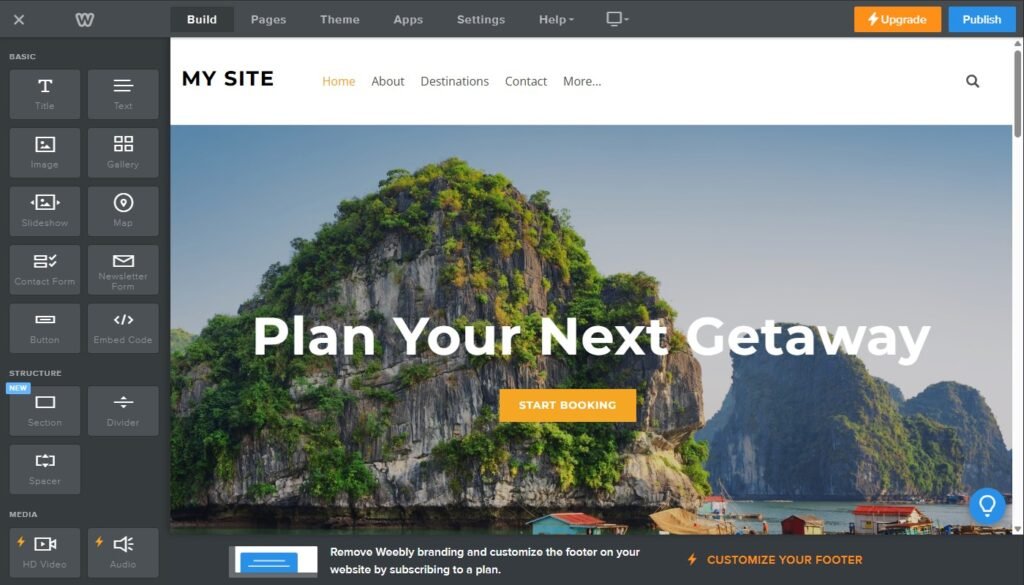
You choose a template, swap out text and images, adjust colours, and accept the result. Full redesigns or significant layout changes are practically impossible without starting from scratch. There is no global style system, changing your brand colour requires updating it manually in every location. There are no reusable components, no animation controls, no scroll effects, and no way to meaningfully customize the mobile experience independently from the desktop layout.
For a personal site with three pages, this may not matter. For any brand that needs its website to reflect real design standards or that expects to evolve its visual identity over time — Weebly’s editor is a ceiling, not a foundation.
| Who Should Still Use Weebly? | Who Should NOT Use Weebly? |
| Basic personal sites (resume, hobby, simple portfolio) Landing page for a one-time event Non-commercial blogs or fan projects Local stores already using Square POS and needing very basic online presence | Growing businesses Agencies or freelancers building for clients Brands that require modern design or scalable content Sites dependent on strong SEO or third-party integrations Any commercial site generating revenue or leads |
Thus, if you’re not planning to scale your site or rely on content strategy, SEO or integrations, Weebly can be “just enough.” But beyond that, it becomes a limiting choice. In case you’re building a business-critical website, switching to another platform is a must.
Should You Migrate Away from Weebly?
In one word: yes – if you care about the future of your website.
Here’s what migration gets you:
| Feature Area | Weebly (current) | Modern Alternatives (Wix, Squarespace, WordPress, etc.) |
| Active Development | Stagnant | Monthly updates, roadmap, AI tools |
| SEO Tools | Limited basics | Rich editor, schema, auto redirects, SEO AI assistants |
| eCommerce | OK (via Square) | Full suite with digital goods, abandoned cart, coupons |
| Design Flexibility | Very limited | Full layout control, custom CSS, responsive editing |
| App Marketplace | Old + shrinking | 1000+ integrations, Zapier, CRMs, marketing apps |
| Support | Slow for Weebly | 24/7 live chat, priority care on higher tiers |
| Future Security | Uncertain | Stable, scalable, and forward-compatible |
If you decide to migrate, the process is more straightforward than most users expect. The key steps are: choosing a platform that fits your needs (Wix for ease and completeness, WordPress for full ownership and power, Webflow for design-led projects), backing up all content and media from Weebly, exporting SEO metadata, rebuilding your design on the new platform, ideally using the migration as an opportunity to modernize rather than simply clone, and setting up 301 redirects to preserve your existing rankings in Google. The redirect step is critical: skipping it is the most common cause of traffic loss after a platform migration.
Additional steps will depend on your site’s complexity: online stores, booking systems, and content-heavy blogs each have their own migration considerations.
Final Verdict: Is Weebly Worth Using?
Weebly is no longer competitive and that verdict has become harder to soften with each passing year. For business owners, creators, or marketers who rely on their digital presence to build audiences, generate leads, or drive sales, the platform’s limitations are not manageable inconveniences. They are structural barriers to growth.
It remains functional, simple, and reliable for very small projects. But it offers no innovation, no future-proofing, and no competitive flexibility.
If your website matters: if it connects to your business, if it needs to rank in search, if it represents your brand to people who haven’t met you yet, it’s time to switch to a modern, actively developed platform. The cost of migrating is a one-time effort. The cost of staying on a stagnant platform compounds every month.